


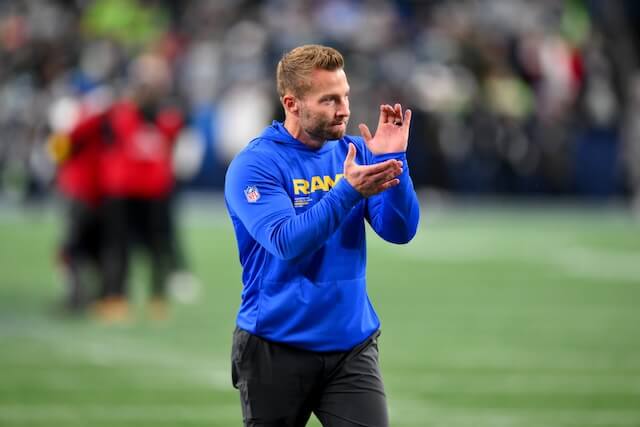
The Los Angeles Rams have a credible path to contend for the 2026 Super Bowl, thanks to elite quarterback play, an accomplished head coach, and a roster that has come together well during the 2025 season. Their challenge will be navigating a deep NFC field while emerging from a tight NFC West race, where Seattle currently leads by one game and San Francisco is tied with Los Angeles in the standings.
At 11-4 and already in the playoff mix, the Rams have demonstrated they can win in various ways and remain competitive against postseason-caliber opponents. With Matthew Stafford playing at an MVP level and Sean McVay maximizing an offense that leads the league in scoring, Los Angeles has the core elements needed to make a serious run. The question is whether this group can sustain its late-season surge and translate regular-season efficiency into postseason consistency. This hurdle often separates contenders from champions and defines the teams that threaten the longest winning streak in NFL history.
Stafford Factor
Stafford remains one of the best quarterbacks in football this season and is the primary reason the Rams are viewed as a viable Super Bowl threat. He has topped 4,100 passing yards with 40 touchdown passes and only a handful of interceptions through 15 games, while posting one of the top passer ratings in the league. His ability to push the ball vertically, work the middle of the field, and punish single coverage has restored Los Angeles’ offense to a level comparable to its peak years under McVay.
What makes Stafford particularly dangerous in this phase of his career is how efficiently he is operating the system. He is spreading the ball around, getting the ball out quickly when pressured, and limiting the high-risk throws that previously led to turnovers. In tight games, that combination of arm talent and decision-making gives the Rams an edge over many NFC opponents that rely on more conservative passing attacks.
Coaching Matters
McVay’s presence on the sideline adds another layer to the Rams’ Super Bowl outlook. Since taking over in 2017, he has become one of the most accomplished coaches in football, with multiple NFC title game appearances and a Super Bowl championship already on his resume. His playoff record and game-planning track record demonstrate that he can develop opponent-specific plans that accentuate matchups and conceal weaknesses over a multi-week postseason run.
Schematically, McVay has evolved the offense from its early, heavy-play-action identity into a more flexible system that can operate from spread looks, condensed formations, and tempo variations. That versatility makes the Rams harder to defend in January, when defenses are well-prepared and require offenses to win in multiple ways. It also helps protect Stafford, allowing Los Angeles to lean on quick game, screens, and misdirection when protection becomes an issue against top defensive fronts.
Seattle Advantage
The current NFC West context highlights both the division’s strength and the challenges ahead. Seattle sits at 12-3 and atop the division, while San Francisco and Los Angeles are both 11-4 and fighting for seeding and the possibility of a home playoff game. That cluster means the Rams are likely to see a familiar opponent in the postseason and may have to win on the road, which historically adds another layer of difficulty to a Super Bowl push.
Still, the Rams’ performance metrics support their status as contenders. They enter the final stretch leading the league in points scored and ranking near the top in total yardage, while holding a substantial positive point differential of more than 150 points through 15 games. That kind of scoring margin often correlates with deep playoff runs because it reflects not only offensive firepower but also the ability to close out games and dominate weaker opponents.
Los Angeles’ Defense
Defensively, Los Angeles has not been as dominant as its offense, but the unit has been good enough to complement the scoring punch. The Rams are holding opponents just under 20 points per game on average, with solid work against the run and a pass defense that bends more than it breaks. The pass rush, although not leading the league in sacks, has produced timely pressure that forces hurried throws and creates takeaway opportunities, a crucial factor in postseason football.
Overall Health
Health and depth will be central to whether these strengths translate into a Super Bowl trip. Stafford’s durability late in the year, the condition of the offensive line, and the availability of key playmakers on both sides of the ball will dictate how much of the playbook McVay can tap into. If the Rams reach January relatively healthy, their offensive ceiling and coaching advantage give them a tangible edge over many NFC rivals.
The NFC landscape also shapes the Rams’ odds. Teams such as Seattle, San Francisco, Chicago, and Philadelphia all present different challenges, from potent pass rushes to physical run games and dual-threat quarterbacks. The Rams have already demonstrated their ability to compete with this tier. Still, the playoffs will compress those matchups into a short window with no margin for error, thereby raising the premium on in-game adjustments and situational football.
Veteran Experience
Another factor in Los Angeles’ favor is experience. Many core pieces, led by Stafford and McVay, have been through a Super Bowl run together and understand the demands of a long postseason. That history can help in handling hostile environments, managing game pace and staying composed in one-score playoff games that swing on a handful of snaps.
Ultimately, the Rams’ chances to win the 2026 Super Bowl rest on the convergence of their elite passing game, McVay’s tactical acumen and the ability of a good, if not dominant, defense to hold up against top competition. They have the profile of a team that can get hot in January and stack wins against quality opponents. If they secure favorable seeding and maintain their current level of play, Los Angeles belongs firmly in the group of teams with a realistic shot to lift the Lombardi Trophy.